Software Integration.
Clean integrations with Salesforce, SAP and Stripe.
Integrations built for third-party API changes, with retries, visibility and recovery planned in.
About Software Integration
Third-party APIs can fail or change outside your control. Plan for retries, visibility and recovery.
Software Integration is the specialist work of connecting systems such as CRMs, ERPs, billing providers, HR systems and custom internal tools, and doing it in a way that survives the third-party quietly changing behaviour.
We use webhooks where possible, poll with backoff where necessary, cache aggressively, and rate-limit defensively. Every integration has a health check, a replay tool, and an alert route.
Handed over with mocks for local development, replay tooling for debugging, and runbooks for the most common third-party failure modes.
Project deliverables
What we can deliver.
These are possible deliverables for this service. Your statement of work defines the selected scope, price, milestones, acceptance checks and responsible reviewers.
- 01Production integrations, deployed
- 02Health checks & alerting per integration
- 03Replay & backfill tooling
- 04Mocks for local development
- 05Rate limit & backoff strategies documented
- 06Runbooks for common failure modes
Business use cases
Where Software Integration fits.
Explore practical applications of Software Integration and the workflows each can support. We agree the implementation scope around your users, systems and priorities.
CRM sync
Two-way sync between your product and Salesforce / HubSpot with conflict resolution.
Billing integration
Stripe / Chargebee wired to your product, with dunning and revenue recognition.
ERP or accounting
SAP / NetSuite / QuickBooks integrated with reconciliation and audit trail.
Technical approach
Capabilities your project needs.
We select tools around your requirements, existing systems and operational constraints. These capabilities guide the architecture and implementation.
- Webhooks & polling
- Idempotency keys
- Rate limiting
- Circuit breakers
- Replay tooling
- Health checks
Our delivery process
From requirements to handover.
We plan requirements, architecture, design, implementation, testing, release and handover. The proposal identifies the engineering review and client acceptance points for your project.
Service questions
Software Integration: common questions.
What if the third-party API changes?
Contract tests catch breaking changes before production. Alerting fires on unusual response patterns. Runbooks cover the top-N known failure modes for each vendor.
Can new software connect to our existing tools without double entry?
Usually, yes, if each existing tool offers an API, webhooks, a database you are permitted to read or, as a last resort, scheduled file exports. Each type of record gets one system that owns it, and the others receive its changes automatically, so staff enter it once. What each tool allows is confirmed during scoping, not assumed. The design depends on which system owns each record, the tool's API limits, how quickly changes must appear elsewhere, how duplicates and conflicts are resolved, and how failed syncs are retried, alerted and replayed. Where a tool has no maintained SDK worth trusting, we build a client with idempotency, retries and circuit breakers. If a tool offers no access beyond its own screens, double entry can be reduced but not always removed, and you will know that before build.
Who owns the credentials?
You own them from day one. We work under your vendor accounts. Secrets live in your secrets manager.
See the work
Related software in action.
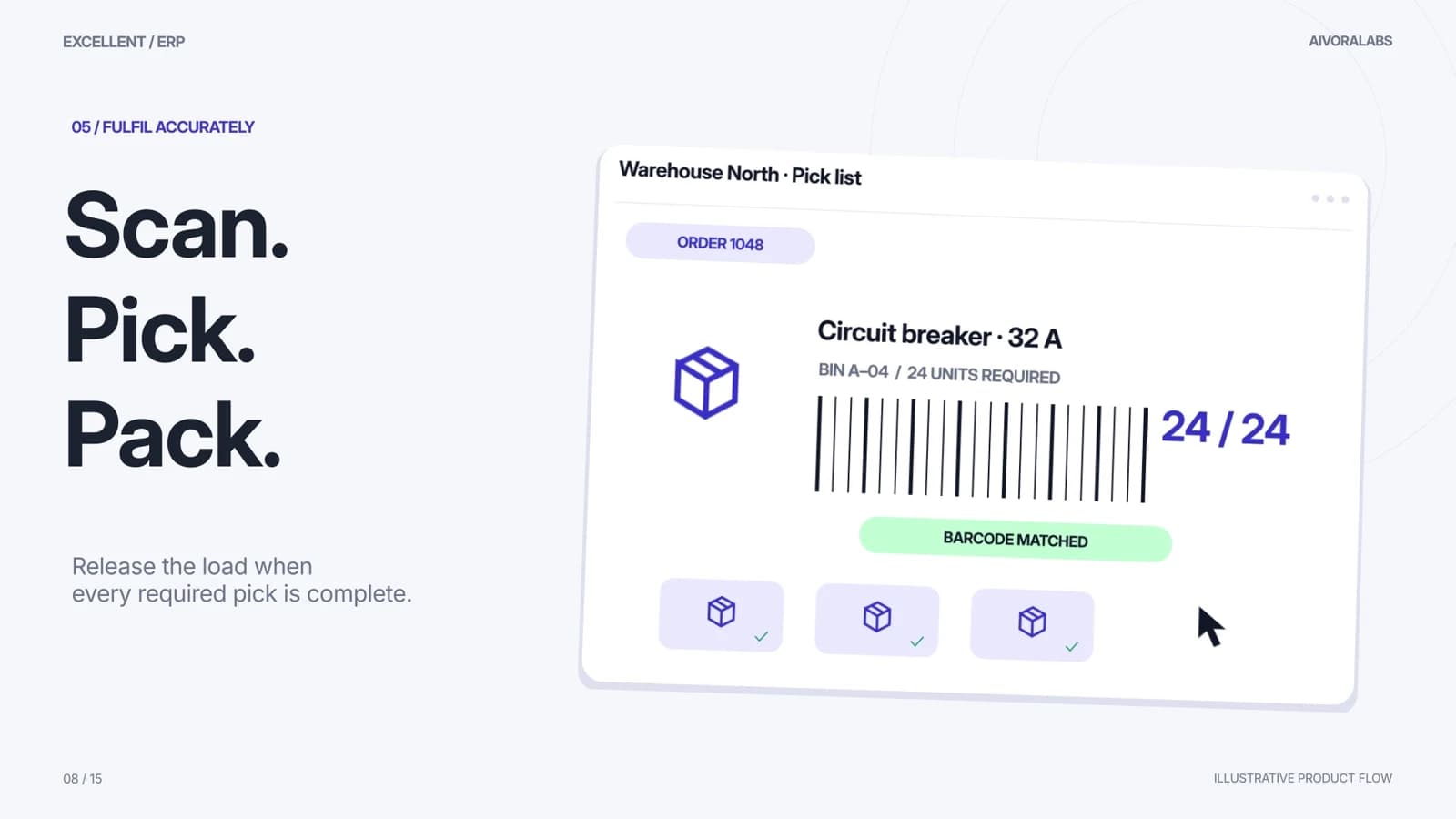 SW2:30 · Product demo
Excellent ERP
Connect every order, from purchase to delivery and collection.
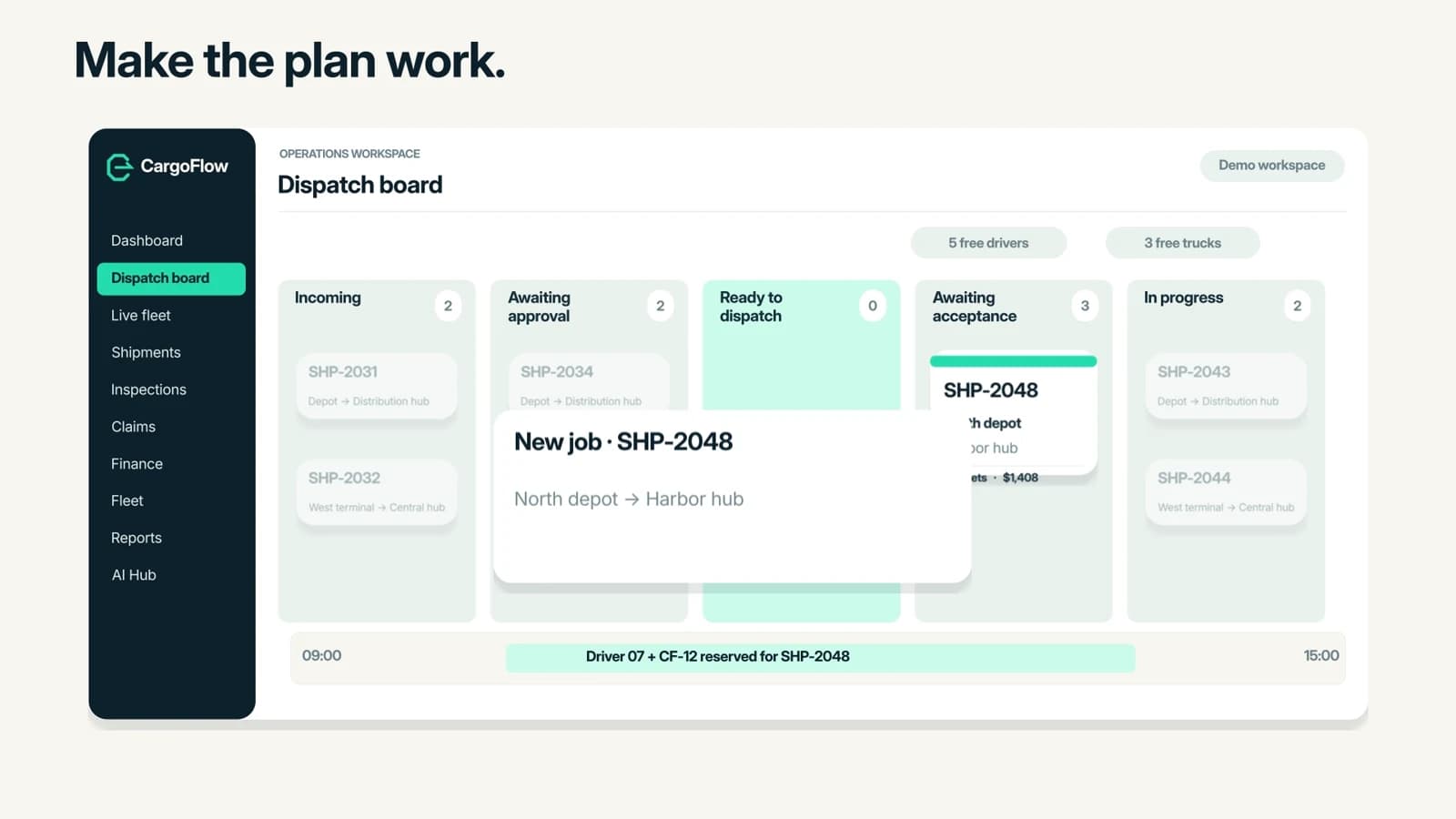 SW2:30 · Product demo
CargoFlow
One connected freight journey, from booking to settlement.
Related services
Services that work together.
Plan your project
Discuss your requirements.
Tell us your goals, current systems and delivery priorities. We will define the scope and provide a written quote for Software Integration before implementation.
Timelines, ownership, third-party licences, warranty and support are agreed for your engagement.