Generative AI Integration.
LLMs, RAG, and copilots inside your product.
Add a copilot to your product without lighting your latency and cost budget on fire.
About Generative AI Integration
A "chat with your data" demo takes an afternoon. Shipping one that survives Monday is a different job.
Generative AI Integration is about plumbing LLM capability into a product surface that already exists, not building a new one alongside it. We work inside your codebase, your data model, and your auth story.
The interesting problems aren't the model; they're the retrieval, the guardrails, the streaming UX, the cost per session, the eval regime that stops a silent regression, and the fallback when the provider has a bad day.
You leave with the copilot code, documentation and access defined in the agreement, including the parts nobody talks about in demo videos.
Project deliverables
What we can deliver.
These are possible deliverables for this service. Your statement of work defines the selected scope, price, milestones, acceptance checks and responsible reviewers.
- 01Copilot integrated into your existing product
- 02Retrieval layer over your data, with cite-back
- 03Streaming UX components (with cancel/retry)
- 04Rate limiting, quota, and cost telemetry
- 05Prompt injection & jailbreak defence tests
- 06Provider failover and offline degrade paths
Business use cases
Where Generative AI Integration fits.
Explore practical applications of Generative AI Integration and the workflows each can support. We agree the implementation scope around your users, systems and priorities.
Inline product copilot
An assistant that understands the state of your app: the selected row, the current filter, the user's role.
Doc / knowledge chat
A grounded chat over your policies, contracts, or wiki, with citations you can click.
Agentic actions
The copilot can send an email or file a ticket, with confirmation before taking action.
Technical approach
Capabilities your project needs.
We select tools around your requirements, existing systems and operational constraints. These capabilities guide the architecture and implementation.
- RAG & retrieval
- Streaming UI
- Guardrails
- Telemetry & cost
- Failover
- Red-team suites
Our delivery process
From requirements to handover.
We plan requirements, architecture, design, implementation, testing, release and handover. The proposal identifies the engineering review and client acceptance points for your project.
Service questions
Generative AI Integration: common questions.
How do you handle hallucination?
Retrieval-grounded outputs with cite-back, structured extraction where possible, and eval sets that fail the build on unsupported claims. Confidence is instrumented per-response.
What's the impact on our infrastructure cost?
We model cost-per-session before we integrate. Rate limits, caching, prompt compression, and cheaper-model routing are all part of the design, not a follow-up ticket.
Can we swap providers later?
Yes. The integration is written against a thin capability interface, so switching providers is a config change, not a rewrite.
See the work
Related software in action.
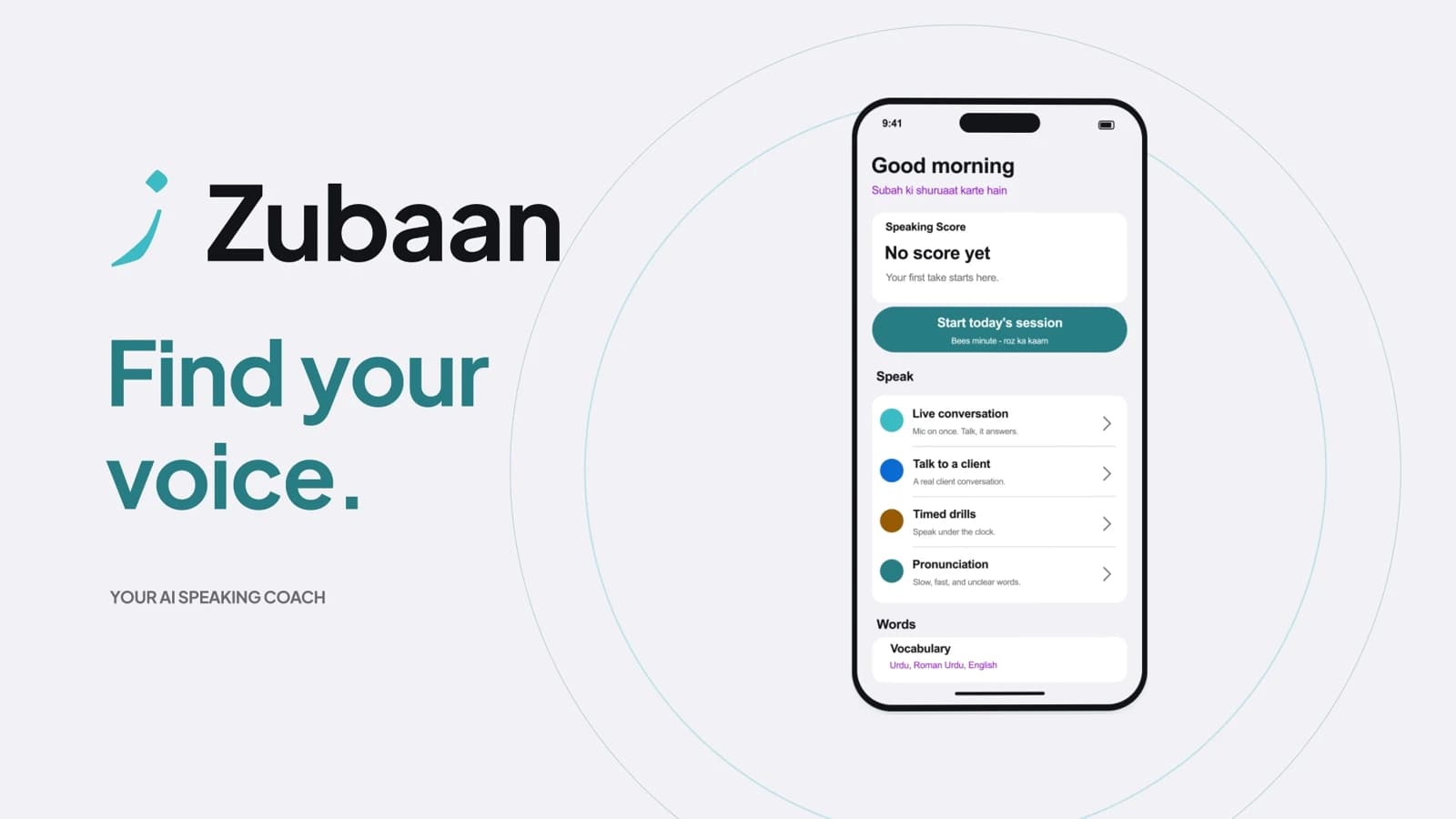 AI0:45 · Product demo
Zubaan
Build confidence for the next conversation in English.
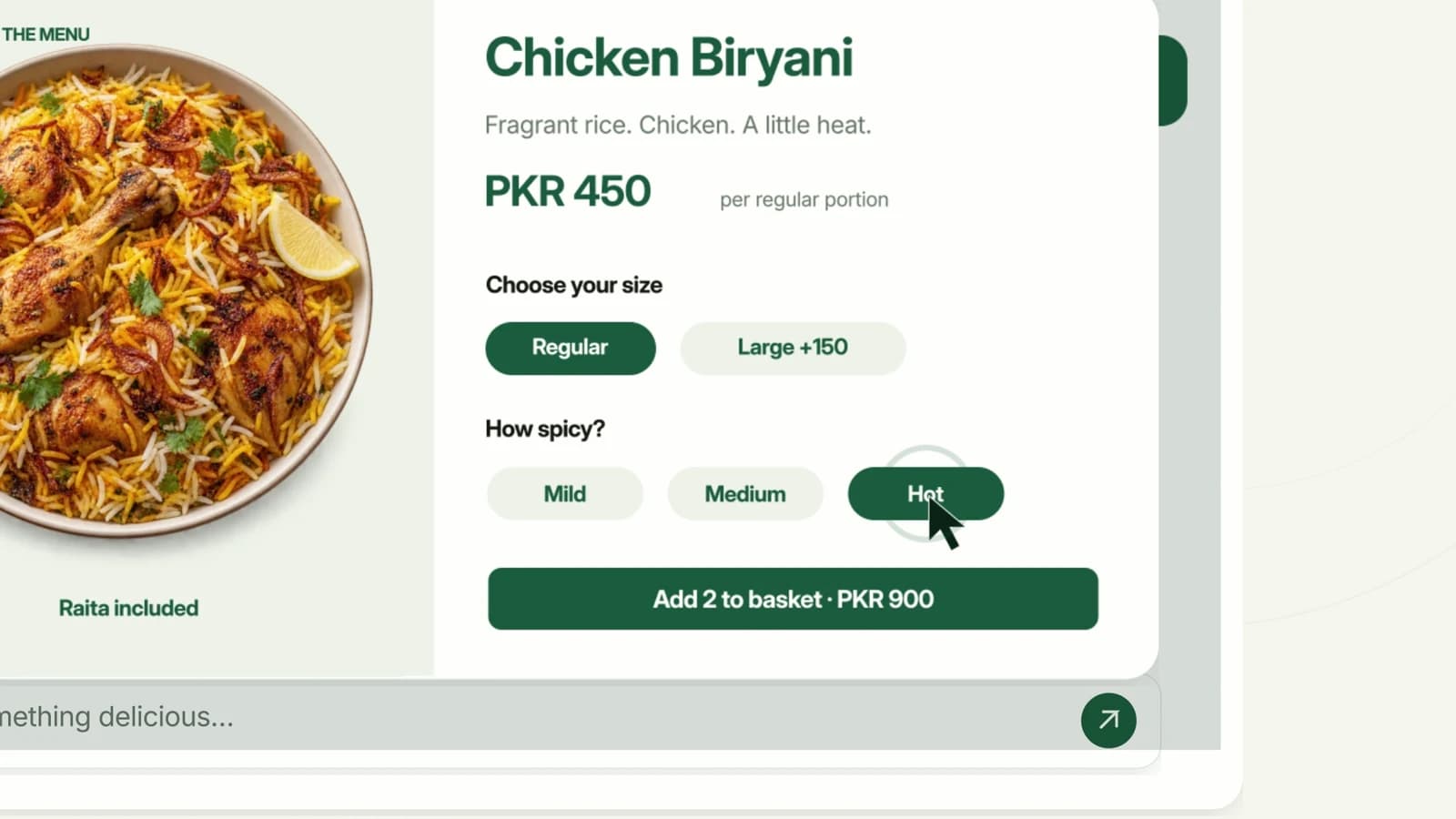 AI1:40 · Product demo
Agentic Ordering
From a conversation to a confirmed food order.
Plan your project
Discuss your requirements.
Tell us your goals, current systems and delivery priorities. We will define the scope and provide a written quote for Generative AI Integration before implementation.
Timelines, ownership, third-party licences, warranty and support are agreed for your engagement.